



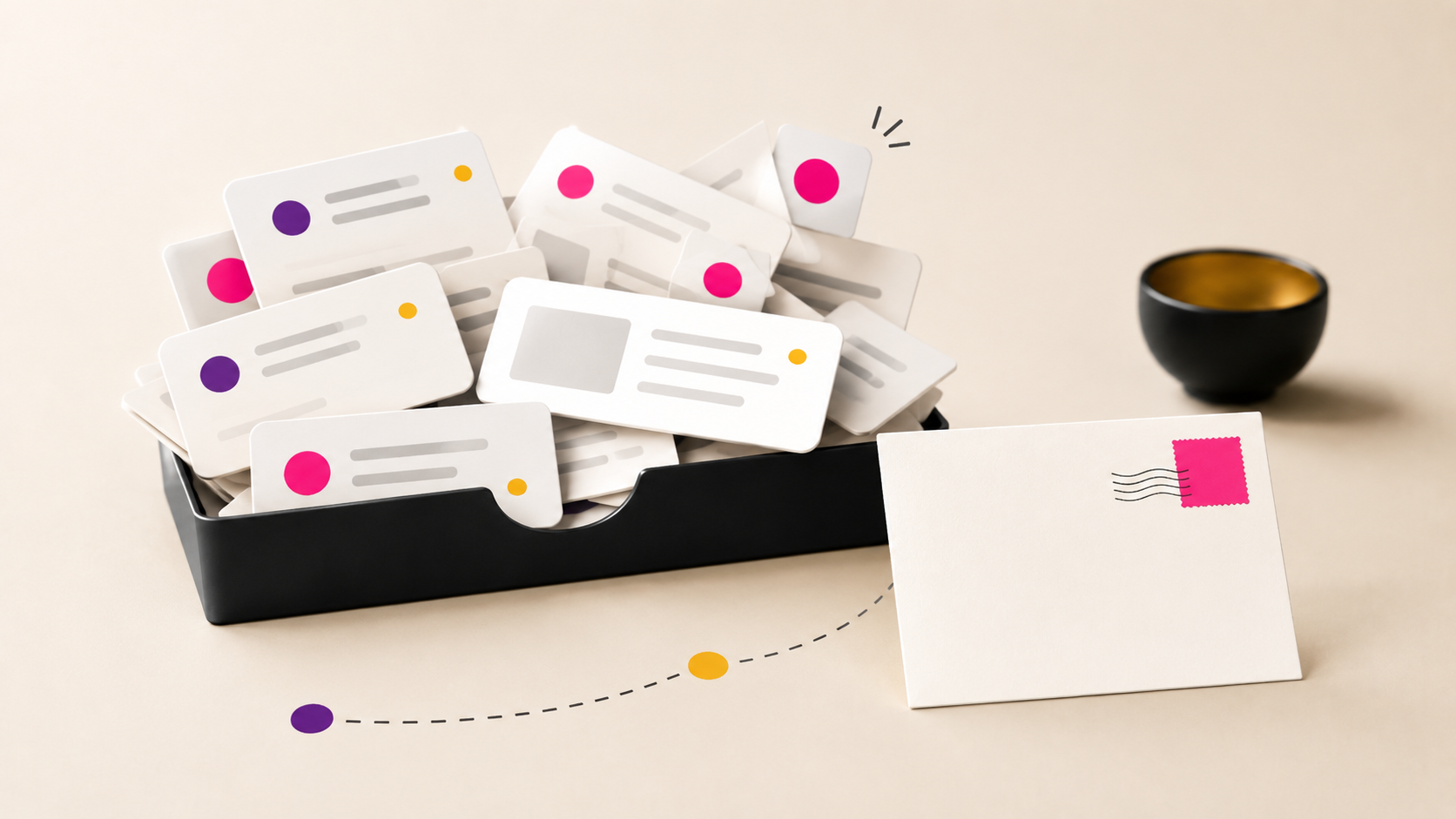
Most people receive more digital messages than they can realistically read. That does not mean digital marketing does not work. But it does mean brands need to think carefully about where they can still earn proper attention.
Mail creates a different kind of attention
A piece of mail is not competing in the same way as an email subject line. It can be held, opened, placed on a table, shared with someone else or returned to later. That physical presence gives it a longer opportunity to be noticed.
JICMAIL's Q1 2026 figures show that Direct Mail had an average lifespan of 7.8 days and achieved 141 seconds of attention. Those are useful numbers for marketers because they show that mail is not always a single moment. It can create repeated exposure over several days.
It can help brands feel more considered
When someone receives a relevant, well-produced piece of mail, it can feel more intentional than another digital message. That matters at a time when many consumers are quick to ignore online noise.
Mail can work particularly well when the message needs space: a new product, a local launch, a considered purchase, a membership offer, a catalogue, a charity appeal, a service introduction or a reactivation campaign.
Mail had an average lifespan of 7.8 days and achieved 141 seconds of attention in Q1 2026. That is not a single moment — it is repeated exposure.
It does not have to replace digital
The strongest argument for mail is not that it should replace email, paid social or search. It is that it can make those channels work harder.
Mail can prompt a website visit, branded search, app download, online purchase or account look-up. It can introduce the message physically, then support the digital journey afterwards. That makes it especially valuable for brands trying to build a more balanced marketing mix.
Relevance still matters
Being seen is only useful if the message is relevant. Poor targeting, weak data or generic creative will limit the impact of any channel, including mail.
That is why BBS focuses on the full journey: data quality through OptiMail, postal planning and tracking through MailHub, and managed campaign delivery through Direct Mail. The aim is not just to send more mail. It is to send mail that has a clear reason to exist.
Inboxes are not getting quieter. Digital attention is not getting easier to win. For many businesses, that makes direct mail more interesting, not less.
Used well, mail gives brands a chance to be seen, held and remembered. In a marketing world full of fleeting impressions, that physical attention is valuable.